 EN
EN
 jp
jp  de
de  ru
ru  pt
pt  vi
vi  ms
ms  id
id  ne
ne  tl
tl 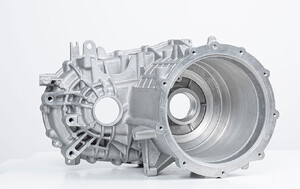



Tel:
+86-13382516668

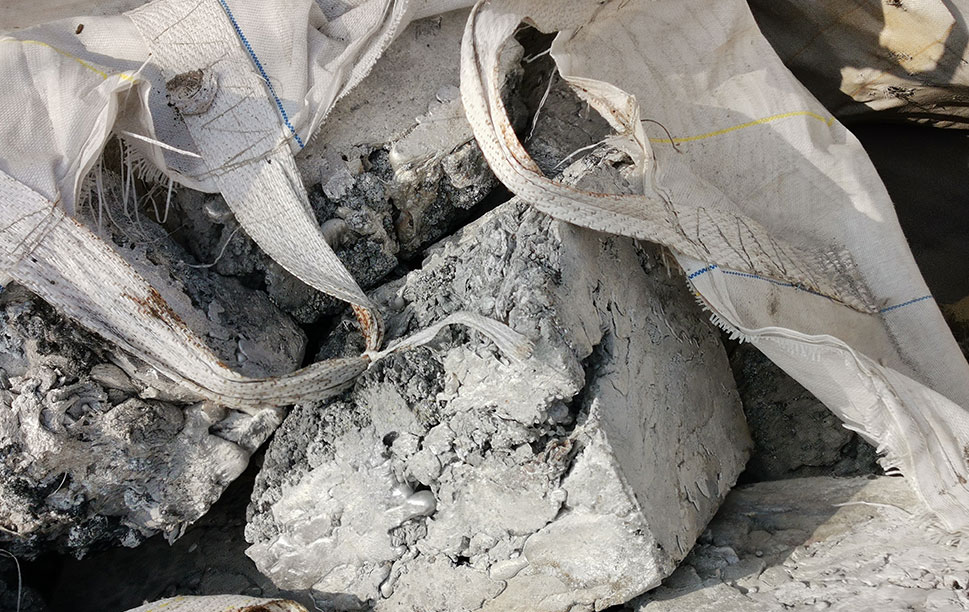
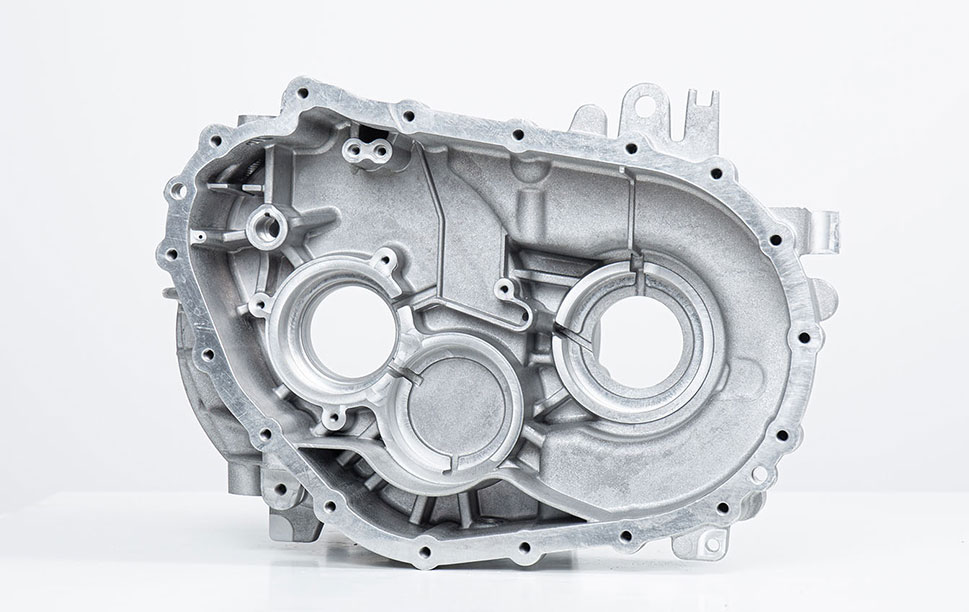

A casting project can look successful at the sample stage and still become difficult once regular production begins. Problems often appear later as tooling wears, order volumes increase, machining requirements become tighter, or different production batches need to deliver the same fit and performance. That makes supplier selection an engineering and production decision, not just a purchasing decision.
For magnesium alloy casting projects, buyers need to understand how a supplier controls the complete manufacturing route. Part design, alloy choice, tooling, casting parameters, secondary machining, surface treatment, inspection, and production planning are closely connected. Weak control in one stage can create additional cost or instability further downstream.
This is particularly relevant when sourcing magnesium aluminum alloy die casting components for ongoing production. A suitable supplier should be able to explain not only how the first parts will be made, but also how the same quality level will be maintained across future batches, engineering changes, and higher-volume orders. The following areas provide a practical framework for evaluating that capability before a project moves into tooling and production.
The first step is to determine whether the supplier's actual manufacturing capability matches the design and performance requirements of the part. A capable supplier should review the drawing before committing to tooling and identify features that may affect filling, cooling, ejection, machining, or dimensional stability.
Wall thickness transitions, ribs, bosses, mounting points, draft angles, deep cavities, and tolerance-sensitive interfaces can all influence how easily a component can be produced. In magnesium alloy casting, these details should be considered as part of the complete production process rather than treated as isolated drawing features.
Material selection also needs to match the end use of the component. Different magnesium alloys may offer different combinations of castability, mechanical performance, machinability, and finishing behavior. Buyers should therefore communicate how the part will be assembled, loaded, machined, coated, and used in service instead of selecting an alloy only because it was used on a previous project.
Material choice should also be reviewed alongside the supplier's actual manufacturing range. Buyers comparing different magnesium grades can refer to YiRui Metal's magnesium alloy products to better understand available material options before confirming which alloy is most suitable for the intended casting application.
The same principle applies when comparing magnesium and aluminum solutions. For magnesium aluminum alloy die casting projects, material selection can influence tooling behavior, machining strategy, finishing requirements, component weight, and the economics of the finished part. The supplier should therefore be able to explain the practical manufacturing implications of each option rather than focusing only on raw material cost.
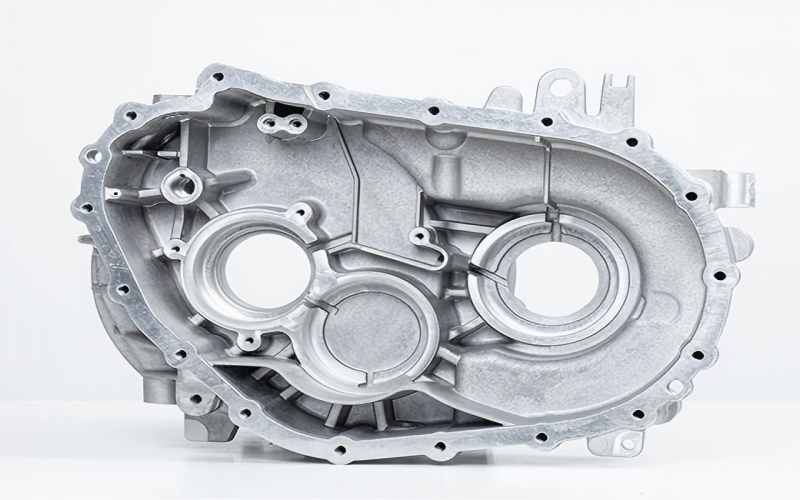
Tooling is one of the most important foundations of repeatable casting production because many later quality problems can be traced back to decisions made before the first production run.
A production-oriented supplier should consider gate location, runner layout, venting, overflow design, cooling, ejection, parting lines, and the areas most likely to experience distortion or wear. These elements influence metal flow, solidification, surface condition, trimming, dimensional repeatability, and long-term die maintenance.
Buyers should also clarify who is responsible for tool design, tool manufacturing, trial adjustments, repair, maintenance, storage, and engineering changes. In long-running magnesium alloy casting programs, tooling should not be treated as a one-time purchase that disappears after approval. There should be a clear method for recording modifications so that later changes do not introduce unexplained differences between production runs.
Early design-for-manufacturing review can also reduce unnecessary tooling complexity. Small changes to non-critical geometry may improve filling, simplify ejection, or reduce the amount of secondary machining without changing the function of the finished component. A supplier that raises these issues before tooling begins is often easier to work with during later production stages.
Lead time should also be discussed in terms of the complete tooling cycle rather than simply the date when the tool is expected to be finished. Tool design, fabrication, trial casting, dimensional review, correction, and final approval all contribute to the actual production launch schedule.
Producing an acceptable sample is only the beginning. The more important question is whether the same dimensions and functional results can be maintained across repeated production batches.
Casting quality is influenced by several interacting process conditions, including material condition, die temperature, filling behavior, cooling, ejection, trimming, and equipment settings. For this reason, a reliable magnesium alloy casting supplier should work from documented process controls rather than depending mainly on operator judgment.
Buyers should ask how approved production settings are recorded and how the supplier manages a restart after tooling maintenance, a long production pause, or an engineering change. It is also useful to understand how material batches are controlled and how nonconforming parts are separated from acceptable output.
Dimensional consistency becomes especially important when cast parts later enter CNC machining or assembly. A casting may remain technically within drawing tolerance while gradually shifting toward one side of the allowable range. That can reduce machining allowance, change fixture behavior, or create fit problems later in the production chain.
The strongest suppliers therefore look beyond individual dimensions and consider how the casting behaves as part of the full manufacturing process. For magnesium aluminum alloy die casting components, this level of process control becomes increasingly important as tolerances tighten or assembly complexity increases.
Most production castings do not leave the factory immediately after casting. Depending on the part, additional operations may be required before the component is ready for assembly or shipment.
These operations can include trimming, deburring, CNC machining, drilling, tapping, surface preparation, coating, or other project-specific finishing. Each additional stage introduces another opportunity for dimensional variation, handling damage, contamination, or schedule delays.
When machining is required, buyers should confirm how machining datums relate to the original casting references. Fixture design also matters because thin or lightweight components may respond differently to clamping forces. A stable magnesium alloy casting process can still result in inconsistent finished parts if the machining stage is poorly controlled.
Surface requirements should be discussed early as well. Cosmetic expectations, coating areas, visible faces, parting lines, ejector locations, and machining marks can influence both tooling design and finishing strategy. Defining these expectations after tooling is complete may lead to avoidable rework.
For magnesium aluminum alloy die casting sourcing, buyers should compare suppliers based on the finished component rather than the price of the raw casting alone. A lower casting price may not represent a lower project cost if machining, finishing, inspection, or rework is less efficiently controlled.
Inspection should confirm that the production process remains stable, not simply act as a final sorting step after defects have already been created.
Before production begins, buyers and suppliers should agree on which characteristics are critical and how those features will be checked. Depending on the application, this may include dimensions, machining features, appearance, material verification, assembly interfaces, or other functional requirements defined by the drawing.
The inspection plan should also distinguish between features that require direct measurement and those that can be controlled reliably through the production process. Measuring every dimension at the same frequency can increase cost without necessarily improving quality, while insufficient monitoring of a critical interface can allow problems to reach assembly.
Traceability is equally important. Production records should allow the supplier to connect shipped parts to the relevant production batch and inspection information. When an issue occurs, good traceability helps define the affected material more precisely and supports faster root-cause analysis.
For ongoing magnesium alloy casting programs, buyers should clarify what records will be retained and what documentation will be available with production orders. The exact level of documentation can vary by project, but expectations should be agreed before regular production begins.
Capacity should not be judged only by the number or size of casting machines in a factory. The more useful question is whether the supplier can increase output while maintaining tooling condition, process stability, inspection discipline, and delivery performance.
Scaling production can reveal problems that do not appear during low-volume sampling. Higher tool utilization, additional shifts, faster material handling, and increased machining throughput can all introduce variation if the production system has not been designed to support the higher workload.
Buyers should therefore understand how the proposed project fits into the supplier's existing production schedule and what happens if demand increases. Tool maintenance, machining capacity, inspection resources, and staffing should be considered together rather than separately.
This is especially important for magnesium aluminum alloy die casting programs expected to grow over time. A capable supplier should be able to discuss how production will be expanded before current capacity becomes a constraint.
Before tooling begins, it is useful to confirm how the proposed part will move through casting, machining, finishing, inspection, and volume production. If you already have drawings, material requirements, or expected production volumes, you can discuss the project with YiRui Metal to review whether the available casting and downstream capabilities are a suitable match for the application.
| Evaluation Area | What a Capable Supplier Should Demonstrate | Why It Matters | Potential Warning Sign |
|---|---|---|---|
| Part and process review | Reviews geometry, alloy choice, tolerances, casting feasibility, and downstream operations before tooling | Reduces manufacturability problems after tooling investment | Quotation is issued with little technical discussion |
| Tooling management | Controls tool design, trials, repairs, maintenance, and engineering changes | Supports stable quality over repeated orders | Tool changes are poorly documented |
| Process consistency | Uses documented production parameters and controlled restart procedures | Helps reduce variation between production runs | Results depend mainly on individual operator experience |
| Secondary processing | Coordinates casting with machining, finishing, and other required operations | Reduces downstream variation and rework | The supplier evaluates only the raw casting stage |
| Inspection and traceability | Defines critical checks and maintains production records | Supports faster problem isolation and quality review | Batch identification or inspection criteria are unclear |
| Production scaling | Plans tooling, equipment, machining, maintenance, and inspection around future demand | Helps maintain quality when order volumes increase | Capacity is discussed only as machine availability |
Selecting a magnesium casting supplier requires more than confirming that the factory has suitable equipment. The stronger question is whether the supplier can turn your drawing into a controlled manufacturing process and maintain that process as tooling ages, batches repeat, engineering changes occur, and production demand increases.
For a successful magnesium alloy casting program, buyers should evaluate casting feasibility, tooling management, dimensional consistency, machining and finishing, inspection, traceability, and production capacity as one connected system. The same approach is useful when comparing magnesium aluminum alloy die casting suppliers because the lowest initial quotation does not always create the lowest production risk.
Sharing drawings, critical dimensions, finishing expectations, assembly conditions, and projected order volumes early in the supplier-selection process gives both sides a clearer basis for determining whether the project is a good manufacturing fit. That preparation can reduce unnecessary changes after tooling begins and make the transition from sampling to repeat production more predictable.
Check whether the supplier can review manufacturability, manage tooling, control repeat production, coordinate machining and finishing, and provide appropriate inspection and traceability. Equipment is important, but stable process control is more important for long-term production.
Provide the 2D drawing or 3D model, material requirement if known, critical tolerances, finishing requirements, machining needs, application information, and expected production volume. Complete project information allows the supplier to evaluate the manufacturing route more accurately.
Tooling affects metal flow, cooling, ejection, surface condition, and dimensional repeatability. Poor decisions around gating, venting, parting lines, or cooling can create quality problems that remain throughout the life of the project.
Compare the complete finished-part process rather than material or casting price alone. In magnesium aluminum alloy die casting projects, tooling, machining, finishing, weight, and production requirements can all influence the final decision.
Consistency depends on controlled tooling, documented process conditions, stable material handling, planned maintenance, clear inspection procedures, and proper change management. These controls reduce unnecessary variation between repeated production runs.
No. Capacity must be considered together with process control, tool maintenance, machining resources, inspection capability, and traceability. A supplier must be able to increase output without losing control of quality or delivery stability.