 EN
EN
 jp
jp  de
de  ru
ru  pt
pt  vi
vi  ms
ms  id
id  ne
ne  tl
tl 

Tel:
+86-13382516668

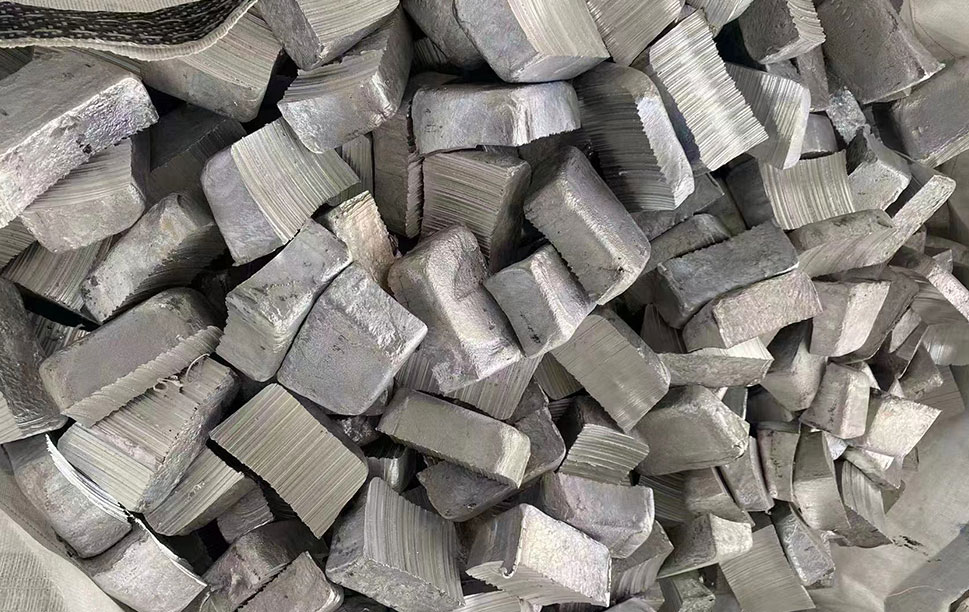
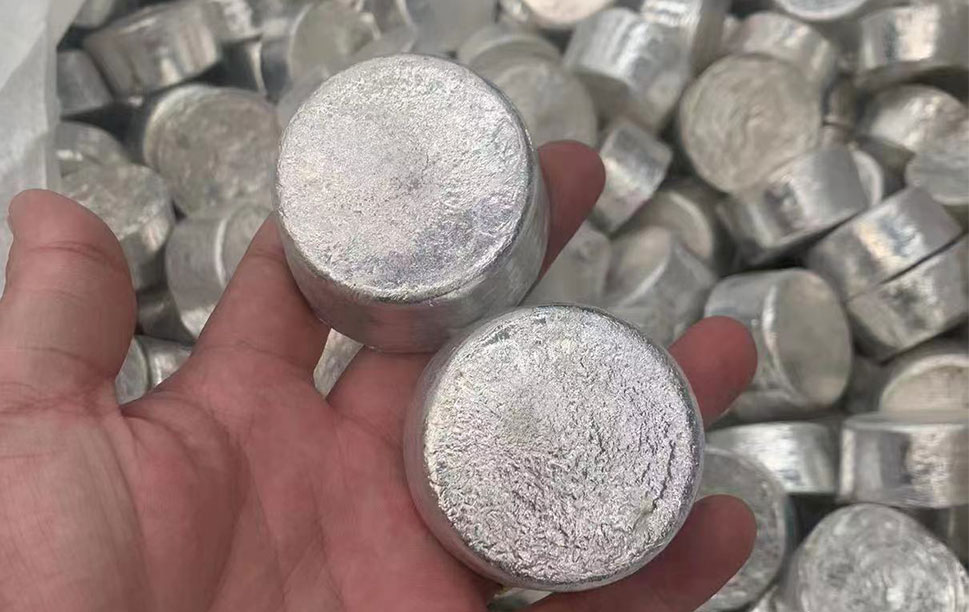


Lightweight materials are becoming increasingly important in modern engineering, where reducing component weight while maintaining reliable performance is a constant challenge. Among various metal materials, magnesium round bar and aluminum round bar are two popular choices for applications that require a combination of strength, machinability, and efficiency.
At first glance, magnesium and aluminum may appear similar because both are lightweight metals widely used in industrial manufacturing. However, their differences in density, mechanical properties, corrosion resistance, processing characteristics, and cost can lead to very different performance outcomes in real-world applications.
Choosing between magnesium round bar and aluminum round bar requires more than simply comparing material prices. Engineers need to consider the operating environment, manufacturing requirements, weight reduction goals, and long-term performance expectations to determine which material delivers the best overall value.
This comprehensive comparison explores the key differences between magnesium round bar and aluminum round bar, helping designers, engineers, and industrial buyers understand their unique advantages and select the right material for different engineering applications.
The primary difference between magnesium round bar and aluminum round bar lies in their material structure and physical characteristics. Magnesium is the lightest structural metal commonly used in engineering applications, while aluminum is recognized as one of the most widely adopted lightweight metals due to its balanced performance and mature processing technology.
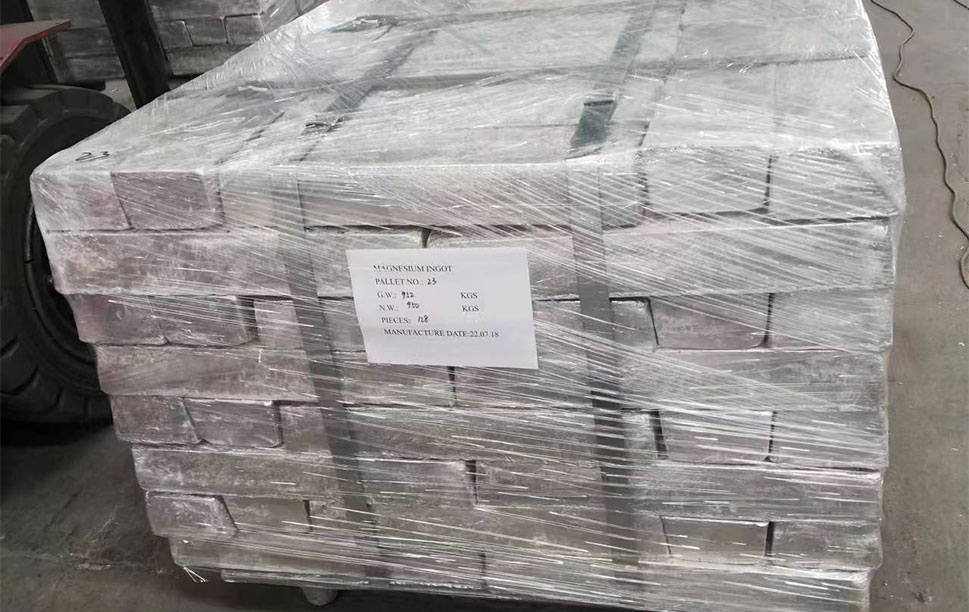
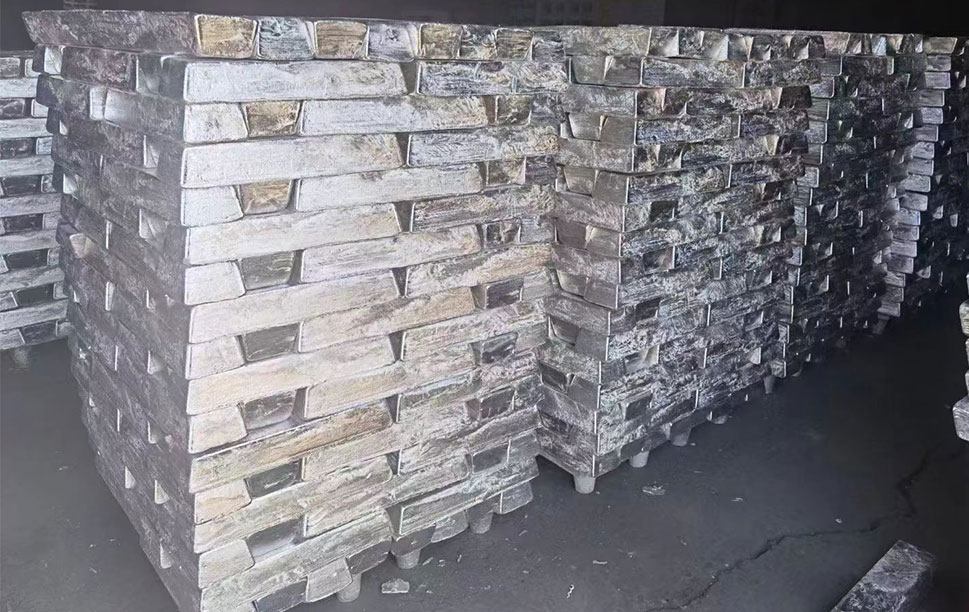
A magnesium round bar is manufactured from magnesium alloys that may contain elements such as aluminum, zinc, manganese, or rare earth elements to enhance strength, corrosion resistance, and thermal performance. Different alloy compositions allow magnesium materials to meet various industrial requirements.
Compared with aluminum, magnesium has a significantly lower density. With a density of approximately 1.74 g/cm³, magnesium is about one-third lighter than aluminum, which has a density of approximately 2.70 g/cm³. This weight advantage makes magnesium round bar particularly attractive for applications where reducing component mass is a major design objective.
However, aluminum round bar has advantages in areas such as corrosion resistance, availability, and established manufacturing processes. Aluminum naturally forms a protective oxide layer that helps improve resistance to environmental exposure, while magnesium often requires additional surface protection when used in harsh conditions.
In general, magnesium round bar is selected when lightweight performance, high machinability, and improved weight efficiency are priorities. Aluminum round bar is often preferred when manufacturers require reliable durability, cost efficiency, and broad application flexibility.
Yirui Metal Mg provides magnesium material solutions for various industrial applications. Engineers and buyers can explore available magnesium products and material options to better understand different specifications and application possibilities.
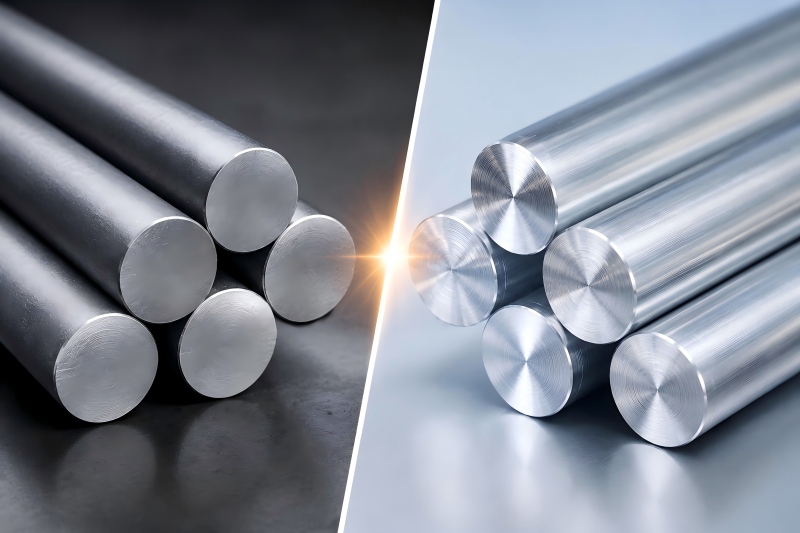
Weight, strength, and durability are among the most important factors when selecting a metal round bar. Both magnesium round bar and aluminum round bar offer advantages over heavier metals such as steel, but their performance characteristics differ.
| Property | Magnesium Round Bar | Aluminum Round Bar |
|---|---|---|
| Density | Approximately 1.74 g/cm³ | Approximately 2.70 g/cm³ |
| Weight Performance | Excellent lightweight advantage for weight-sensitive designs | Lightweight with broader general industrial usage |
| Strength-to-Weight Ratio | High potential depending on alloy composition | Good balance between strength and weight |
| Corrosion Resistance | Requires suitable protection in demanding environments | Strong natural oxide protection |
| Machinability | Excellent machinability with lower cutting resistance | Good machinability and mature processing methods |
| Thermal Performance | Good heat dissipation capability | Very good thermal conductivity |
The biggest advantage of magnesium round bar is its lightweight performance. In industries such as transportation and aerospace, reducing component weight can improve fuel efficiency, energy consumption, portability, and overall system performance.
Although magnesium provides excellent weight savings, aluminum round bar remains highly competitive because of its durability and environmental adaptability. Aluminum components can perform well in outdoor and marine-related environments due to their natural oxide layer and corrosion-resistant characteristics.
The strength comparison between magnesium and aluminum depends heavily on the selected alloy grade and application requirements. A suitable magnesium round material selection should consider the operating environment, machining requirements, and expected service performance.
Machining performance is another important consideration when comparing magnesium round bar with aluminum round bar. Manufacturing efficiency, production speed, tool requirements, and finishing processes can all influence the final material choice.
Magnesium round bar is known for excellent machinability. Its lower hardness and cutting resistance allow machining operations such as turning, drilling, and milling to be performed efficiently. This characteristic can help reduce machining time and energy consumption in suitable manufacturing environments.
However, magnesium machining requires proper handling procedures. Magnesium chips and dust need appropriate management because fine particles can present safety risks under certain conditions. Manufacturers should follow recommended machining practices to ensure safe and efficient production.
Aluminum round bar is also widely recognized for its good machinability. Due to decades of industrial adoption, aluminum processing technologies, equipment, and supply chains are highly developed. This makes aluminum a convenient choice for many high-volume manufacturing applications.
When selecting between magnesium round bar and aluminum round bar, engineers should evaluate machining accuracy requirements, production quantity, surface treatment needs, operating temperature, and environmental conditions. The right material choice can improve manufacturing efficiency while supporting long-term product performance.
Both magnesium round bar and aluminum round bar serve important roles in modern industries, but their applications are often determined by different performance requirements.
Magnesium round bar is commonly used in industries that prioritize lightweight design, including automotive components, aerospace parts, electronic equipment housings, precision mechanical components, sports equipment, and portable devices. Its low density makes it valuable for products where reducing weight can improve efficiency and user experience.
In automotive applications, manufacturers may use magnesium alloys for selected structural and functional components to reduce vehicle weight and improve overall energy efficiency. In electronics and precision equipment, magnesium materials are often considered when lightweight structures, dimensional stability, and effective heat dissipation are required.
A properly selected magnesium round material can help engineers achieve weight reduction while maintaining suitable mechanical performance. This makes magnesium an attractive option for industries where performance improvement depends heavily on minimizing component mass.
Aluminum round bar is widely applied in construction components, transportation structures, marine equipment, electrical parts, and general machining applications. Its corrosion resistance, recyclability, and cost advantages make it suitable for a broad range of industrial uses.
The best choice depends on whether the application requires maximum weight reduction, environmental durability, easier sourcing, or cost control. Understanding these differences allows engineers to match material characteristics with actual operating needs.
Cost and availability are important factors when selecting between magnesium round bar and aluminum round bar. Although magnesium offers excellent lightweight advantages, aluminum generally benefits from a larger global supply chain, wider market adoption, and more established recycling systems.
For large-scale industrial production, aluminum is often selected because of its competitive pricing and accessibility. Its mature manufacturing infrastructure allows companies to source, process, and replace aluminum components efficiently.
Magnesium round bar may involve higher material costs depending on alloy type, processing requirements, and market conditions. However, the additional investment can be worthwhile when weight reduction creates measurable benefits, such as improved efficiency, easier transportation, or enhanced product performance.
The decision should not be based only on initial material cost. A complete evaluation should include manufacturing efficiency, maintenance requirements, component performance, and lifecycle value. In applications where weight reduction provides significant benefits, magnesium round bar can offer long-term advantages despite a higher initial investment.
Many engineering teams evaluate magnesium and aluminum based on total application value rather than simply comparing purchase prices. Factors such as reduced system weight, machining efficiency, service requirements, and product performance should all be considered during material selection.
Selecting the right material between magnesium round bar and aluminum round bar requires a detailed understanding of project goals and operating conditions. Engineers should consider mechanical requirements, environmental exposure, manufacturing methods, and expected service life before making a decision.
Magnesium round bar is often the better choice for lightweight engineering designs where reducing weight is essential. It is especially suitable for applications that require efficient machining, good dimensional stability, and improved weight-to-performance ratios.
Aluminum round bar is often preferred for projects that require excellent corrosion resistance, stable performance, broad availability, and economical production. Its versatility makes it one of the most commonly used engineering materials worldwide.
Before choosing a round bar material, companies should evaluate whether weight reduction is a primary objective, whether the component will face corrosive environments, what machining processes are required, and what performance level is expected during operation.
A careful comparison of magnesium round bar and aluminum round bar allows engineers to avoid unnecessary material compromises. Selecting the appropriate material at the design stage can improve product reliability, reduce production challenges, and support long-term application performance.
As an experienced magnesium material supplier, Yirui Metal Mg helps customers understand material characteristics and select suitable magnesium solutions for different applications. For assistance with material selection, product specifications, or application requirements, customers can contact Yirui Metal Mg’s technical team for professional support.
Magnesium round bar and aluminum round bar both provide valuable advantages for modern engineering applications. Aluminum offers excellent corrosion resistance, mature processing technology, and cost advantages, while magnesium round bar delivers outstanding lightweight performance and excellent machinability.
The ideal choice depends on the specific requirements of each project. When reducing weight is a critical goal, magnesium round bar can provide significant performance benefits. When availability, durability, and cost efficiency are the main considerations, aluminum round bar remains a reliable option.
By understanding the differences between magnesium round bar and aluminum round bar, engineers, designers, and purchasing teams can make more informed decisions and select the material that best matches their application requirements.
A magnesium round bar is mainly used for lightweight structural components, automotive parts, aerospace applications, electronic housings, precision mechanical products, and other applications where reducing weight is important.
Yes. A magnesium round bar has a lower density than aluminum round bar and provides a significant weight advantage in lightweight engineering designs.
The strength depends on the alloy type and application requirements. Some magnesium alloys provide excellent strength-to-weight performance, while aluminum alloys may offer better corrosion resistance and durability in certain environments.
Yes. Magnesium round bar generally has excellent machinability because of its low cutting resistance, allowing efficient turning, drilling, and milling operations.
Yes. In many applications, magnesium round bar requires coatings or surface treatments to improve corrosion resistance, especially in humid or corrosive environments.
Engineers should consider weight requirements, corrosion conditions, machining needs, strength expectations, material availability, and total project cost before selecting the most suitable material.

